Registro de taxis de plataforma en Durango: entre dudas, cobros y rechazo en redes sociales
Conductores cuestionan el empadronamiento promovido por las autoridades y preguntan qué beneficios concretos recibirán a cambio del pago y los nuevos requisitos.
El anuncio del registro de los conductores que trabajan mediante plataformas digitales en Durango provocó una reacción inmediata en redes sociales. Entre las preguntas, críticas y expresiones de rechazo aparece una duda que se repite de distintas formas: ¿qué obtiene realmente el conductor a cambio de registrarse y/ o empadronamiento pagar?
La discusión no se limita al monto de los derechos. Los comentarios revisados muestran que una parte de los usuarios cuestiona la utilidad del trámite, mientras otros preguntan por la participación de plataformas como Uber, Bolt y DiDi, las obligaciones que tendrán los conductores y las consecuencias de no cumplir con el nuevo esquema.
El dinero aparece como el primer reclamo
Uno de los aspectos que más molestia genera es la percepción de que el pago se convirtió en el punto central del procedimiento. Algunos comentarios ironizan con que el dinero aparece como “primer requisito”, mientras otros califican el registro como una forma de recaudación.
La crítica resulta más directa cuando los conductores preguntan qué recibirán a cambio. “¿Qué beneficios como chóferes van a tener?” y “¿cuál es el beneficio para el usuario y conductor?” son algunas de las preguntas planteadas en la conversación digital.
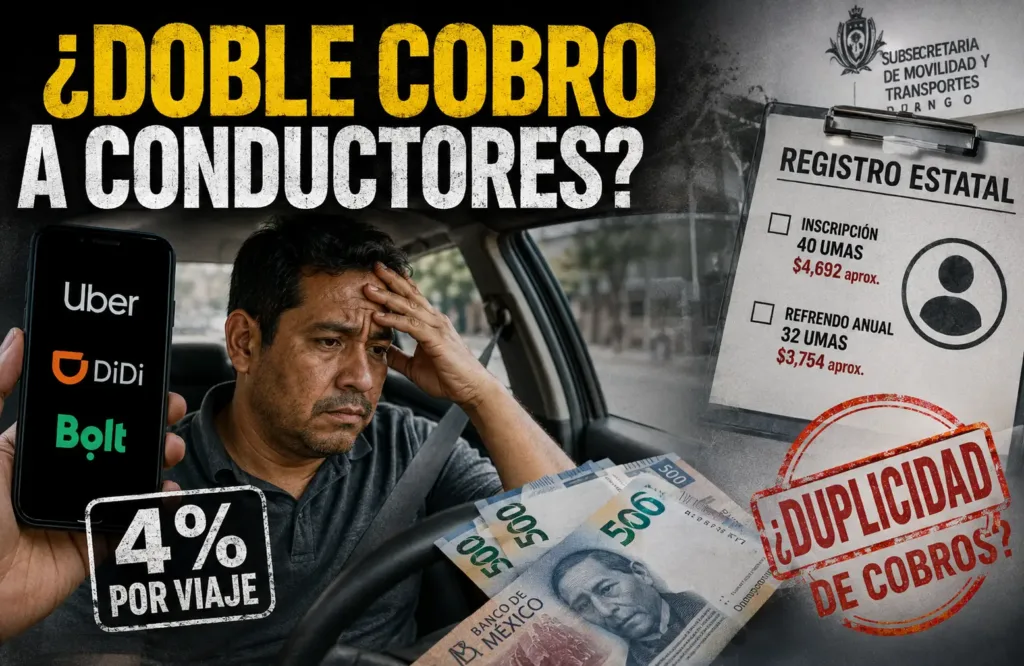
También aparece el argumento del doble cobro. Hay usuarios que consideran que los conductores de plataforma ya cumplen con obligaciones económicas y operativas derivadas de su actividad y cuestionan que ahora deban enfrentar un nuevo pago ante la autoridad estatal.
Uber , Bolt y DiDi también están en el centro de la discusión
Otro de los asuntos recurrentes es la relación entre el nuevo registro y las propias plataformas digitales. Varios usuarios preguntan directamente qué dicen Uber y DiDi sobre el procedimiento y si las empresas respaldarán o rechazarán las nuevas obligaciones.
La discusión tiene un punto particularmente sensible: algunos conductores sostienen que las plataformas ya cuentan con información de sus usuarios y operadores. “Las plataformas ya tienen todos mis datos”, señala uno de los comentarios.
Esa percepción alimenta una pregunta que permanece abierta en la conversación: si las plataformas ya disponen de información sobre quienes prestan el servicio, ¿qué información adicional pretende obtener la autoridad y para qué será utilizada?

Las dudas también alcanzan a la licencia tpo “C”
La licencia tipo C aparece repetidamente entre las interrogantes. Algunos participantes cuestionan si será obligatoria para los conductores de plataformas, mientras otros advierten que existen diferencias entre los vehículos particulares utilizados mediante aplicaciones y los taxis tradicionales.
También se cuestiona el seguro. Un usuario pregunta si los taxis convencionales cuentan con las mismas exigencias y coberturas que se pretenden aplicar a quienes trabajan mediante aplicaciones.
La discusión revela así una comparación inevitable entre ambos modelos de transporte. Los conductores quieren saber si el nuevo esquema realmente equiparará obligaciones, derechos y condiciones de operación o simplemente añadirá requisitos a quienes actualmente trabajan bajo plataformas digitales.
¿Qué pasa con quienes no se registren?
Entre las preguntas más repetidas aparece otra que resulta fundamental: qué ocurrirá con quienes decidan no realizar el trámite.
“¿Y qué pasa si no te registras?”, preguntan distintos usuarios. Otros llaman directamente a no participar y algunos plantean que la falta de registros podría convertirse en una forma de presión colectiva.
Sin embargo, los comentarios muestran también que existe confusión sobre quién tiene la obligación legal de proporcionar la información: las plataformas, los conductores o ambos. Incluso algunos participantes sostienen que el cumplimiento correspondería principalmente a las empresas.
Una regulación que todavía no convence a sus destinatarios
El tono de las respuestas va desde la ironía hasta el rechazo abierto. Aparecen expresiones como “no al registro”, “doble cobro” y “puro negocio”, pero también preguntas legítimas sobre seguridad vial, requisitos, beneficios y alcance de la medida.
Precisamente ahí está el principal problema de comunicación que reflejan las redes sociales: el debate está concentrado en cuánto cuesta el trámite, pero no existe entre los participantes una percepción clara de qué problema resolverá el registro.
Regular el transporte mediante plataformas puede plantear objetivos relacionados con seguridad, identificación de operadores y ordenamiento del servicio. Pero si quienes deben cumplir la medida no encuentran una explicación convincente sobre sus beneficios, el empadronamiento corre el riesgo de ser percibido simplemente como un nuevo costo para trabajar.
Las redes sociales, por sí solas, no constituyen una encuesta de opinión pública. Pero sí dejan una fotografía de las dudas que están circulando entre algunos conductores y usuarios: cuánto tendrán que pagar, qué obligaciones asumirán, qué ocurrirá si no se registran y, sobre todo, qué recibirán a cambio de cumplir con el nuevo esquema.
Contenido:
Doble cobro a choferes de plataformas en Durango ¿registro o recaudación References
“Uber Technologies (UBER) – Segment Financials”. Trefis. Retrieved 12 June 2026.
“Uber Begins Testing Lunch Delivery with UberFRESH”. August 26, 2014.
Bhuiyan, Johana (June 4, 2018). “Uber CEO Dara Khosrowshahi says UberEats has a $6 billion bookings run rate”. Recode. Archived from the original on October 3, 2018. Retrieved October 3, 2018.
“Uber Eats Revenue and Usage Statistics (2025)”. Business of Apps. February 26, 2025. Retrieved March 2, 2025.
Wright, Johnathan L. (September 5, 2017). “Uber Eats debuts Wednesday in Reno”. Reno Gazette Journal. Retrieved September 5, 2017.
“Uber and Postmates Reach Deal in $2.65 Billion Food Delivery Merger”. The New York Times. 2020-07-05. Retrieved 2025-07-18.
“Uber buys Postmates food delivery service”. CNBC. 2020-07-06. Retrieved 2025-07-18.
“Uber buys food delivery service Postmates for $2.65 billion”. Consulting.us. July 10, 2020. Retrieved 2025-07-18.
“Uber Eats, Unfair Dismissal And The Future Of The Gig Economy”. Sprintlaw. 2020-12-17. Retrieved 2025-07-18.
“Uber Eats Canada is accused of drip pricing practices for food deliveries in proposed class action suit”. CTV News Toronto. 2023-07-17. Retrieved 2025-07-18.
“Does Uber Eats owe you money? Proposed class action alleges customers faced hidden service fees”. The Star. 2025-07-18. Retrieved 2025-07-18.
“FTC lawsuit alleges Uber enrolled users in Uber One without consent”. Mashable. 2025-04-21. Retrieved 2025-07-18.
“FTC lawsuit alleges Uber enrolled users in Uber One without consent”. Mashable. 2025-04-21. Retrieved 2025-07-18.
Lagorio-Chafkin, Christine (August 2013). “Resistance is Futile”. Inc. Retrieved March 22, 2019.
Bacon, James (February 2, 2012). “Innovation Uber alles”. The Washington Times. Retrieved September 11, 2015.
Etherington, Darrell (August 26, 2014). “Uber Begins Testing Lunch Delivery With UberFRESH”. Tech Crunch. Retrieved June 2, 2015.
Carson, Biz (28 February 2019). “Uber’s secret goldmine”. Forbes India.
Elliott, Farley (May 4, 2015). “UberFRESH Rebrands to UberEATS Just in Time to Expand Like Crazy”. Eater. Retrieved September 11, 2015.
“Uber’s first spinoff app is a food delivery service in Toronto”. December 9, 2015.
Kosoff, Maya (August 17, 2015). “How Uber’s latest update could pose a major threat to GrubHub”. Business Insider. Retrieved September 11, 2015.
Tepper, Fitz (August 17, 2015). “Uber’s New Update Gives Food Delivery As Much Attention As Transportation”. TechCrunch. Retrieved September 11, 2015.
Turner, Gilles (November 6, 2018). “Uber Plans to Triple Headcount on Food Delivery in Europe Region”. London. Bloomberg News. Retrieved 29 May 2019.
Fresne, Patrick (2021-11-27). “French Revolution 2020:Food wars down the virus haunted streets of France”. Gold and Revolution. Retrieved 2021-11-18.
“Uber sells South East Asia operations to rival Grab”. BBC News. 26 March 2018. Retrieved 1 August 2025.
Lee, Dami (August 8, 2018). “Uber Eats is changing its flat fees to delivery fees based on distance”. The Verge. New York: Vox Media. Retrieved August 9, 2018.
Kerr, Dara (August 8, 2018). “Uber Eats gets a little cheaper and a little more expensive”. CNET. San Francisco: Ziff Davis. Retrieved August 9, 2018.
Ram, Aliya; Bond, Shannon (February 20, 2019). “Uber Eats to cut fees in battle with Deliveroo and Just Eat”. The Financial Times. London: Nikkei Inc. Retrieved 29 May 2019.
Field, Matthew; Rudgard, Olivia (October 15, 2018). “Uber Eats eyes 400 ‘virtual restaurants’ as it takes fight to Deliveroo”. The Telegraph. London. Retrieved 29 May 2019.
Holmes, Mona (May 23, 2018). “Here’s Why a Lot of Delivery Food Isn’t Coming From Actual Restaurants”. Eater LA. Los Angeles: Vox Media. Retrieved 29 May 2019.
“When and where is Uber Eats available?”. Uber Help. Retrieved 2026-06-22.
Jeremy, Bogaisky (June 12, 2018). “Uber Eats To Test Flying Food To Customers By Drone In San Diego”. Forbes. New York. Retrieved 17 June 2019.
Pérez, Sarah (August 20, 2019). “Apple Card launches today for all US customers, adds 3% cash back for Uber and Uber Eats”. TechCrunch. San Francisco: Yahoo! Inc. Retrieved 2019-08-23.
Constine, Josh (July 2, 2019). “Uber Eats invades restaurants with Dine-In option”. TechCrunch. San Francisco: Yahoo! Inc. Retrieved 2019-12-13.
Park, Ju-Min (2019-09-09). “Uber Eats to pull out of South Korea amid tough competition”. Reuters. Seoul. Retrieved 2020-02-08.
Tyko, Kelly (October 18, 2019). “Uber Eats launches delivery alternative with new pickup feature”. USA Today. Washington: Gannett. Retrieved 2019-12-13.
Albrecht, Chris (2019-10-15). “Amid Layoffs, Uber Eats Partners with Burger King”. The Spoon. Seattle. Retrieved 2020-02-08.
Singh, Manish (January 20, 2020). “Uber sells food delivery business in India to Zomato”. TechCrunch. Mumbai: Yahoo! Inc. Retrieved 2020-01-21.
Goel, Vindu; Conger, Kate (2020-01-20). “Uber Sells Food Delivery Business in India”. The New York Times. Seoul. ISSN 0362-4331. Retrieved 2020-02-08.
“Uber exits India’s online food delivery market”. thedrum.com. Retrieved 5 August 2022.
[dead link]
Ziady, Hanna (January 28, 2020). “Uber suffers another blow as it loses McDonald’s delivery monopoly in the UK”. CNN. London: Warner Bros. Discovery. Retrieved 2020-02-08.
Kelso, Alicia (January 30, 2020). “McDonald’s UK taps Just Eat for delivery, ends Uber Eats exclusivity”. Restaurant Dive. Washington: Industry Dive. Retrieved 2020-02-08.
O’Brien, Sarah Ashley (26 February 2020). “Uber Eats head steps down as company focuses on making meal deliveries profitable”. CNN.
Chiappetta, Marco (March 25, 2020). “Uber Eats Demand Soars Due To COVID-19 Crisis”. Forbes. Retrieved 2020-03-31.
“Uber Eats Plans To End Operations In Eight Markets”. forbes.com. Retrieved 4 May 2020.
“Uber Eats decides to switch off in UAE”. Gulf News. Dubai. May 4, 2020. Retrieved 2020-05-15.
“Top Food Delivery Apps in Saudi Arabia 2023”. Dubai: Digital Gravity. 2023-06-21. Retrieved 2023-08-07.
“Uber Eats Revenue and Usage Statistics (2021)”. London: Business of Apps. 2020-08-25. Retrieved 2021-11-25.
“UberEats to discontinue operations in Argentina and Colombia”. latamlist.com. October 25, 2020. Retrieved 25 October 2020.
Duffy, Kate (December 14, 2021). “Uber Eats makes its first-ever delivery to space – Japanese billionaire delivers canned beef and boiled mackerel to the International Space Station”. Business Insider. Singapore: Axel Springer SE. Archived from the original on 2021-12-18. Retrieved 2021-12-18.
“Uber Eats to quit Hong Kong after five years”. hongkongfp.com. Retrieved 30 November 2021.
“Uber to bow out of Brazil restaurant deliveries”. reuter.com. January 6, 2022. Retrieved 6 January 2022.
Leswing, Kif (2022-03-11). “Uber adds fuel surcharge because of high gas prices”. CNBC. New York: NBCUniversal. Retrieved 2022-03-13.
Batey, Eve (2020-04-03). “Delivery Apps Refuse to Temporarily Decrease the Fees They Charge Restaurants”. Eater SF. San Francisco: Vox Media. Retrieved 2020-07-01.
Fickenscher, Lisa; Manskar, Noah (2020-07-01). “Uber Eats cuts fees for NYC restaurants as Grubhub rivalry heats up”. New York Post. New York: News Corp. Retrieved 2020-07-01.
Linsell, Katie (3 May 2022). “Uber Partners With Tesco for Fast Grocery Delivery in the U.K.” London. Bloomberg News. Retrieved 3 May 2022.
Bellan, Rebecca (May 15, 2022). “Uber Eats pilots autonomous delivery with Serve Robotics, Motional”. TechCrunch. San Francisco: Yahoo! Inc. Retrieved 2022-05-16.
Hope, Graham (20 December 2022). “Uber Eats Offers Robot Food Delivery in Miami”. IoT World Today. London: Informa.
“Robots to begin delivering takeaways in Leeds”. www.bbc.com. 2025-12-01. Retrieved 2025-12-02.
“Uber and Coco Announce Strategic Partnership to Launch Coco’s Sidewalk Robots on Uber Eats”. www.prnewswire.com. Retrieved 2026-07-18.
Littman, Julie (Aug 30, 2024). “Uber expands robotic delivery | Smart Cities Dive”. www.restaurantdive.com. Retrieved 2026-07-18.
Delouya, Samantha (15 January 2024). “Uber is shutting down alcohol delivery app Drizly”. CNN. Atlanta: Warner Bros. Discovery.
“Uber ends Foodpanda Taiwan acquisition after regulatory hurdles”. Reuters. 11 March 2025. Retrieved 1 August 2025.
“Uber Eats comes to Turkey via $700M Trendyol Go acquisition”. techcrunch.com. May 6, 2025. Retrieved 6 May 2025.
Tanna, Shivani (15 February 2026). “Uber targets $1 billion boost with 2026 European expansion”. Reuters.
“Uber pauses Europe food delivery expansion as it pursues Delivery Hero deal, FT reports”. Reuters. 5 July 2026.
“Uber to invest $500 mln in Argentina over 3 years, economy minister says”. Reuters. 17 March 2026.
Allyn, Bobby (2020-05-14). “Restaurants Are Desperate — But You May Not Be Helping When You Use Delivery Apps”. NPR. Archived from the original on 2020-05-17. Retrieved 2020-05-20.
Frank points to a clause in the contracts restaurants and the food delivery apps agree to that prohibits owners from charging delivery customers more than people who dine in, even though delivery costs more. “By not forcing those purchasing on apps to bear the whole amount of the fees, instead forcing all menu prices to rise together, in-restaurant diners are effectively subsidizing Grubhub’s high rates,” said Frank, who argues such an arrangement is anti-competitive and illegal.
Baron, Ethan (2020-04-14). “DoorDash, Uber Eats, Grubhub and Postmates make restaurant meals cost more: lawsuit – Four firms’ rise has ‘come at great cost to American society,’ suit claims”. Mercury News. Archived from the original on 2020-04-20. Retrieved 2020-05-19.
Each of the firms uses “monopoly power” to prevent competition, limit consumer choice and force restaurants to agree to illegal contracts that have “the purpose and effect of fixing prices,” the suit claimed. … The four companies give restaurants a “devil’s choice” that requires them to keep dine-in prices the same as delivery prices if they want to be on the app-based delivery platforms, the suit claimed. And restaurants must pay commissions to the delivery firms ranging from 13.5% to 40%, the suit alleged. … Establishments are forced to “calibrate their prices to the more costly meals served through the delivery apps,” the suit alleged.
Stempel, Jonathon (2020-04-13). “Grubhub, DoorDash, Postmates, Uber Eats are sued over restaurant prices amid pandemic”. Reuters. Archived from the original on 2020-04-17. Retrieved 2020-05-19.
GrubHub, DoorDash, Postmates and Uber Eats were sued on Monday for allegedly exploiting their dominance in restaurant meal deliveries to impose fees that consumers ultimately bear through higher menu prices, including during the coronavirus pandemic. In a proposed class action filed in Manhattan federal court, three consumers said the defendants violated U.S. antitrust law by requiring that restaurants charge delivery customers and dine-in customers the same price, while imposing “exorbitant” fees of 10% to 40% of revenue to process delivery orders. The consumers, all from New York, said this sticks restaurants with a “devil’s choice” of charging everyone higher prices as a condition of using the defendants’ services.
Dolmetsch, Chris (2020-04-13). “GrubHub, Doordash Accused in Suit of Pushing Prices Higher”. Bloomberg News. Archived from the original on 2020-04-19. Retrieved 2020-05-19.
The New York customers, who seek class-action status, say the delivery services charge “exorbitant fees” that range from 13% to 40% of revenue, while the average restaurant’s profit ranges from 3% to 9% of revenue, making delivery meals more expensive for eateries. “Restaurants could offer consumers lower prices for direct sales, because direct consumers are more profitable,” the plaintiffs said. “This is particularly true of dine-in consumers, who purchase drinks and additional items, tip staff, and generate good will.”
Davitashvili v GrubHub Inc.
, Link from NPR article (2020).
“Court Listener”. 2020-07-28. Retrieved 2020-07-28.
Stempel, Jonathan (31 March 2022). “Grubhub, Uber Eats, Postmates must face diners’ lawsuit over U.S. restaurant prices”. Reuters. Retrieved 4 October 2023.
“Deliveroo, Uber Eats and Just Eat delivery drivers to strike on Valentine’s Day – ‘it’s about the dignity of every worker'”. Sky News. Retrieved 2024-02-14.
“Deliveroo and Uber Eats riders strike on Valentine’s Day”. BBC News. 2024-02-12. Retrieved 2024-02-14.
“I deliver food to your door, but not this Valentine’s Day. Here’s why we are on strike in the UK”. The Guardian. 2024-02-14. ISSN 0261-3077. Retrieved 2024-02-14.
McCallum, Shiona (26 March 2024). “Payout for Uber Eats driver over face scan bias case”. BBC. Retrieved 29 March 2024.
Lomas, Natasha (28 March 2024). “Uber Eats courier’s fight against AI bias shows justice under UK law is hard won”. TechCrunch. Retrieved 29 March 2024.
Uber’s facial recognition system — based on Microsoft’s facial recognition technology — requires the account holder to submit a live selfie checked against a photo of them held on file to verify their identity.
“I’m a developer for a major food delivery app. The ‘Priority Fee’ and ‘Driver Benefit Fee’ go 100% to the company. The driver sees $0 of it”. reddit. Archived from the original on 2026-01-02. Retrieved 2026-01-15.
“Debunking the AI food delivery hoax that fooled Reddit”. Platformer. 2026-01-06. Retrieved 2026-01-15.
“I am responsible for @UberEats. This post is definitively not about us. I suspect it is completely made up. Don’t trust everything you read on the internet”. X (formerly Twitter). Archived from the original on 2026-01-05. Retrieved 2026-01-15.
Welle, Elissa (2026-01-05). “That viral Reddit post about food delivery apps was an AI scam”. The Verge. Retrieved 2026-01-15.
Newcomer, Eric (12 April 2019). “Uber Has a New Growth Story”. Bloomberg.